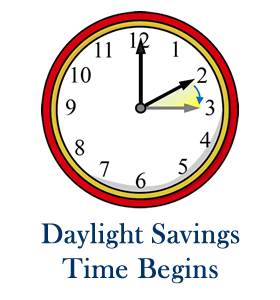
Top X Posts (formerly Tweets) for Daylight Saving Time Begins
Updated
This weekend, millions of people in Alabama and across the country will lose an hour of sleep. This should be the LAST time we change our clocks. LOCK THE CLOCK and let’s make Daylight Saving Time YEAR-ROUND. 1:51 2 MB Load video
— Coach Tommy Tuberville (@SenTuberville) March 6, 2026
Due to the U.S. Daylight Saving Time change on 8–9 March 2026, some trading schedule times on the platform will shift by +1 hour. Plan accordingly and review the updated schedule. More details: eng.primexbt.com/4u8dcFi Load image
Yes, but with permanent Standard Time—not B.C.’s permanent Daylight Saving Time! DST’s dark winter mornings are worse for health. We need morning sunlight; we need Standard Time! Quote Made In Canada @MadelnCanada · 20h Should Canada get rid of the daylight saving time?
British Columbia is switching their clocks for the last time this Sunday. There's a lot going on in the world right now, but there is NO reason to not make daylight saving time permanent. Congress should pass my bill to finally lock the clock.
Commentary account Information: The Health Cost of Daylight Saving Time (Yes, People Do Suffer) • Spring forward = mini jet lag: A 2019 study in Sleep Medicine linked the time change to a 24% increase in heart attacks the following Monday. • Stroke risk up 8% (per a Finnish study). Workplace Show more Load image 30 KB
— US Homeland Security News (@defense_civil25) March 5, 2026
Daylight Saving Time Begins History
Daylight Saving Time is the practice of setting clocks ahead by one hour from Standard Time during the warm parts of the year, so that evenings have more daylight and mornings have less. The primary purpose of this exercise is to make better use of daylight and conserve energy.
Proposed by George Vernon Hudson in 1895, the concept was not adopted until World War I as a way to conserve coal. The US officially instituted daylight saving time in 1918. However, the idea became largely unpopular, leading to its repeal in 1919. It was not until during World War II that the US saw the return of Daylight Saving Time, after which individual states and communities were allowed to choose whether to observe it or not until a federal law was passed in 1966 standardizing the start and end dates.
Today, most areas of the United States observe Daylight Saving Time, where the time is set forward 1 hour to extend evening daylight and reduce the need for artificial lighting. It begins on the second Sunday of March and ends on the first Sunday of November, providing an extra hour of evening light during the warmer months of the year.
Top 5 Facts for Daylight Saving Time Begins in 2026
On March 16th, 2022, the U.S. Senate passed a bill titled the Sunshine Protection Act. The bill makes daylight savings time the new, permanent standard time, which takes effect in November 2023.
Benjamin Franklin first proposed the idea of DST in 1784. He wrote An Economical Project for the Journal of Paris, wherein he discussed the cost of oil for lamps as well as working while it was dark, and sleeping while it was day.
Daylight Savings Time changes at 2:00 a.m. This time is selected in an effort to provide the least amount of inconvenience to businesses and citizens.
DST always begins on the second Sunday in March, and ends on the first Sunday in November.
Hawaii and Arizona do not use DST. Only part of Indiana used it, but since 2006, it's used throughout the whole state.
In the News and Trending for Daylight Saving Time Begins